ServicesSiding Installation
Siding Installation in Spartanburg
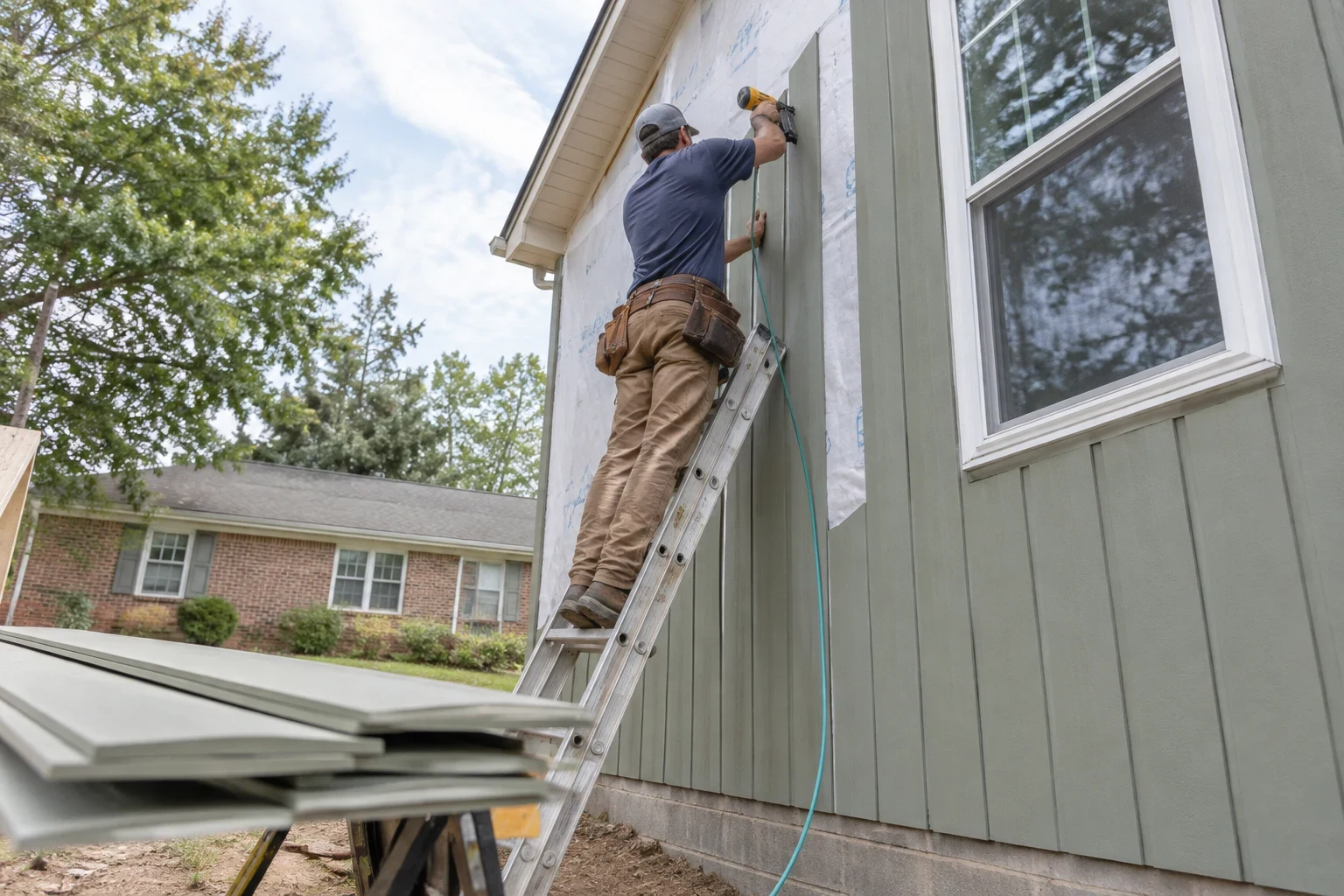
We install new siding on custom homes, additions and existing houses, and we help you pick the right siding first. You get a plain comparison of vinyl, fiber cement and engineered wood, a close look at the wall behind the old siding, and a clean, watertight finish.
Picking siding that suits your house
Siding is the skin of your home. It sheds rain, takes the sun all day and sets the look of the whole house. Most of our siding jobs come from three kinds of people: families finishing a custom home, homeowners adding a room who want the new wall to match, and owners whose old siding has worn out.
Each material behaves differently. Vinyl is light and low-cost but moves a lot with temperature, so it has to be hung loose enough to expand. Fiber cement is heavy, stable and resists rot and insects, though it costs more to install and needs paint over time. Engineered wood gives a true wood look with less weight than fiber cement, but its cut edges must be sealed. We walk you through these trade-offs so you choose with your eyes open.
Long, humid summers are hard on any wall that traps moisture, so we pay as much attention to the wrap and flashing underneath as to the panels you see.
What your siding job includes
- 01
Side-by-side samples
We bring samples and talk through upkeep, durability, color options and cost for each siding type. You leave knowing why one fits your house better than another.
- 02
Removal of old siding
We strip the existing siding, haul it away and check what it was hiding. If an older house has siding that may contain asbestos, we tell you before anything is disturbed so it can be tested.
- 03
Sheathing and framing check
Once the wall is open, we look for soft sheathing, rot around windows and damaged framing. You see photos of anything we find and get a clear answer on what needs repair.
- 04
House wrap and flashing
A weather-resistant barrier goes over the sheathing, with flashing tape and metal at windows, doors and roof lines. This layer is what actually keeps water out of the wall.
- 05
Panel and trim installation
We install siding, corners, soffit and trim to the manufacturer's spacing and fastening instructions. Vinyl is nailed loose for movement, fiber cement is face-nailed or blind-nailed as specified, and every cut end on engineered wood is sealed.
- 06
Daily cleanup
We run magnets for nails, pick up scrap and keep walkways clear so your yard is usable every evening.
Questions about Siding Installation?
Call(864) 469-4282Signs it is time for new siding
Warped or buckled panels
Vinyl that waves or bulges was often nailed too tight or has been cooked by years of afternoon sun. It no longer sheds water the way it should.
Soft spots and rot
Press on wood siding or trim near the ground and around windows. If it gives, moisture has gotten in, and the sheathing behind it may be next.
Paint that will not stay
When paint keeps peeling within a couple of years, the siding is usually holding moisture. Another coat will not fix that.
Cracked or missing pieces
Storm damage, a stray ball or age can leave gaps. Even small openings let water and insects behind the wall.
Stains inside the house
Water marks on interior walls, swollen window trim or a musty room can point to a leak behind the siding.
An addition that will not match
If you are adding on and the old siding is discontinued, residing the whole house may look better than patching.
How a siding project runs
- 1
Project consultation by phone
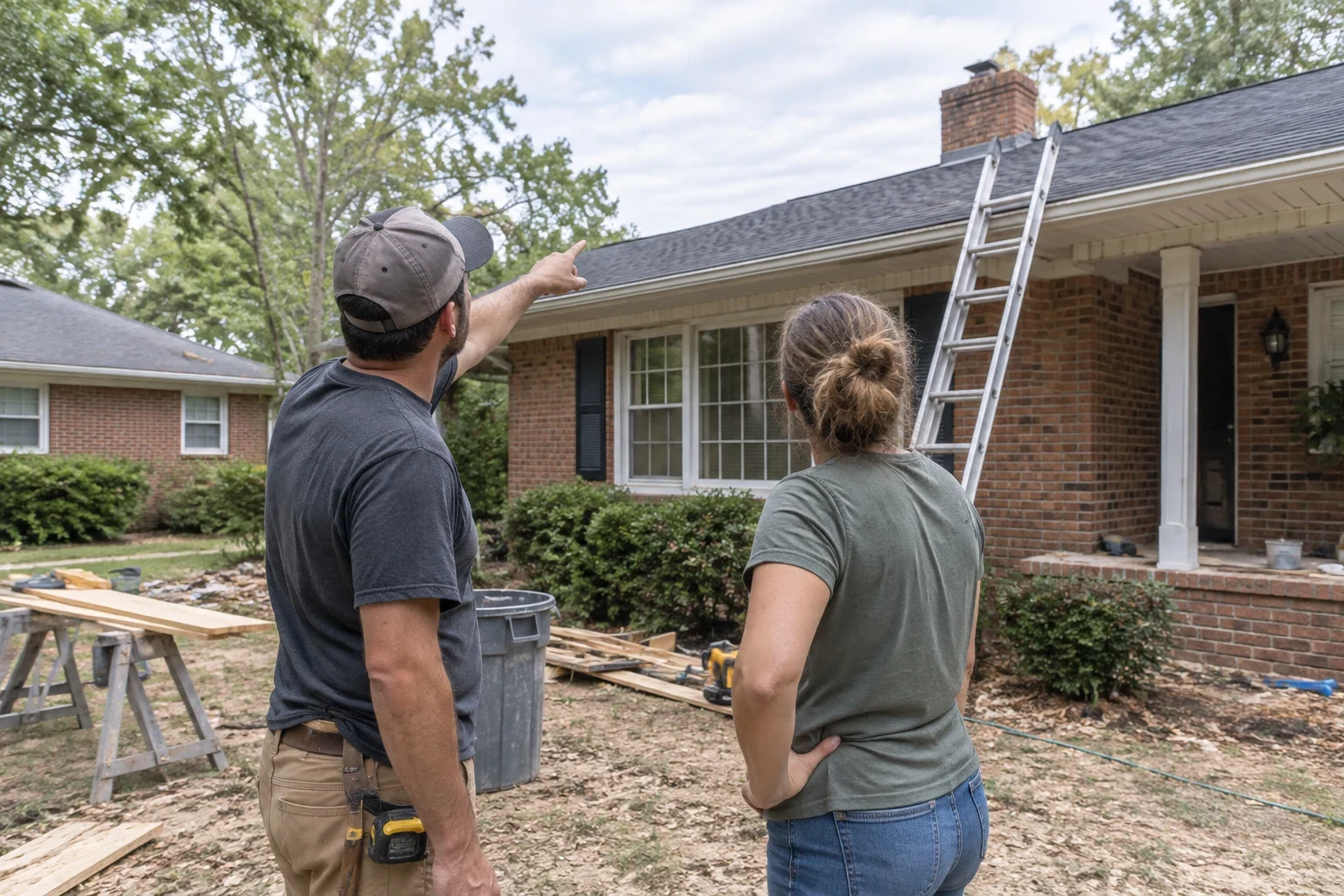
You tell us about the house, what bothers you about the current siding and the look you want. We set a time to see it in person.
- 2
Walkaround and written estimate
We measure every wall, note windows, trim and access, and go over siding choices with samples in hand. Your estimate lists each item so you can see where the money goes.
- 3
Tear-off and repairs
We remove a section at a time so the house is never left wide open. Any damaged sheathing is shown to you and replaced before we move on.
- 4
Wrap, flash and install
The weather barrier and flashing go on first, then the panels, corners and trim. We check whether your project needs a permit and pull it when it does.
- 5
Final walk-through
We walk the house with you, look at every seam and corner, and fix anything you are not happy with before we call it done.
What moves the price of a siding job
Two things drive most of the number: how much wall there is to cover and which product goes on it. The shape of the sheathing under the old siding can shift it as well. We point out those variables before work starts, and your written estimate lists each one on its own line.
- Material choice
- Vinyl generally costs the least to buy and install. Engineered wood sits in the middle, and fiber cement costs more because it is heavier and slower to cut and hang.
- Size and height of the house
- More square footage means more panels and more labor. Two-story walls and steep slopes need scaffolding or lifts, which adds time.
- What is behind the old siding
- Rotted sheathing or framing has to be replaced before new siding goes on. We cannot know the full extent until the wall is open, so we price repairs by the sheet and show you photos.
- Trim, soffit and details
- Lots of windows, gables, dormers or decorative trim add cutting and flashing work. A simple box-shaped house goes faster.
- Removal and disposal
- Tearing off one layer is routine. Multiple layers, or old siding that needs testing, adds labor and disposal costs.
Siding questions we hear often
Which siding material is best for my house?
It depends on how much upkeep you want and your budget. Vinyl needs almost no maintenance but can warp in strong heat. Fiber cement is the most durable and fire-resistant but needs repainting every so often. Engineered wood looks the most like real wood and is lighter to handle. We help you weigh these against the style of your home.
Can you put new siding over my old siding?
Sometimes, but we usually advise against it. Covering old siding hides any rot or moisture behind it and can make windows look sunk into the wall. Pulling the old layer off gives us a clear view of the sheathing and room to wrap the wall correctly before new panels go up.
How long does a siding job take?
An average single-story home often takes about a week, and larger or two-story homes take longer. Weather, repairs found after tear-off and the amount of trim all play a part. We give you an expected timeline with your estimate and keep you updated.
Do I need to be home while you work?
No. We just need access to the outside walls and an outdoor outlet. It helps to move patio furniture, grills and anything hanging on exterior walls before we start.
Can new siding match my addition or remodel?
Yes, that is a common job for us. If your current siding is still made, we match profile and color. If it is discontinued, we show you options for residing the full house or using a contrasting siding that looks intentional, and we coordinate it with any home remodeling work we are already doing.
Will new siding make my home more energy efficient?
Siding alone adds little insulation, but a sealed weather barrier cuts drafts noticeably. Insulated vinyl or foam board behind the siding adds more. We can explain what each option does so you decide whether it is worth it.
Ready to choose your new siding?
Tell us about your house and the look you are after. We will set up a time to measure, bring samples and give you a written estimate you can actually read.