ServicesFlooring Installation
Flooring Installation in Spartanburg
New floors for custom homes, remodels and the house you already live in, from solid oak and engineered wood to vinyl plank and porcelain. We check the subfloor and moisture levels first, then help you choose a floor that suits how your family uses each room.
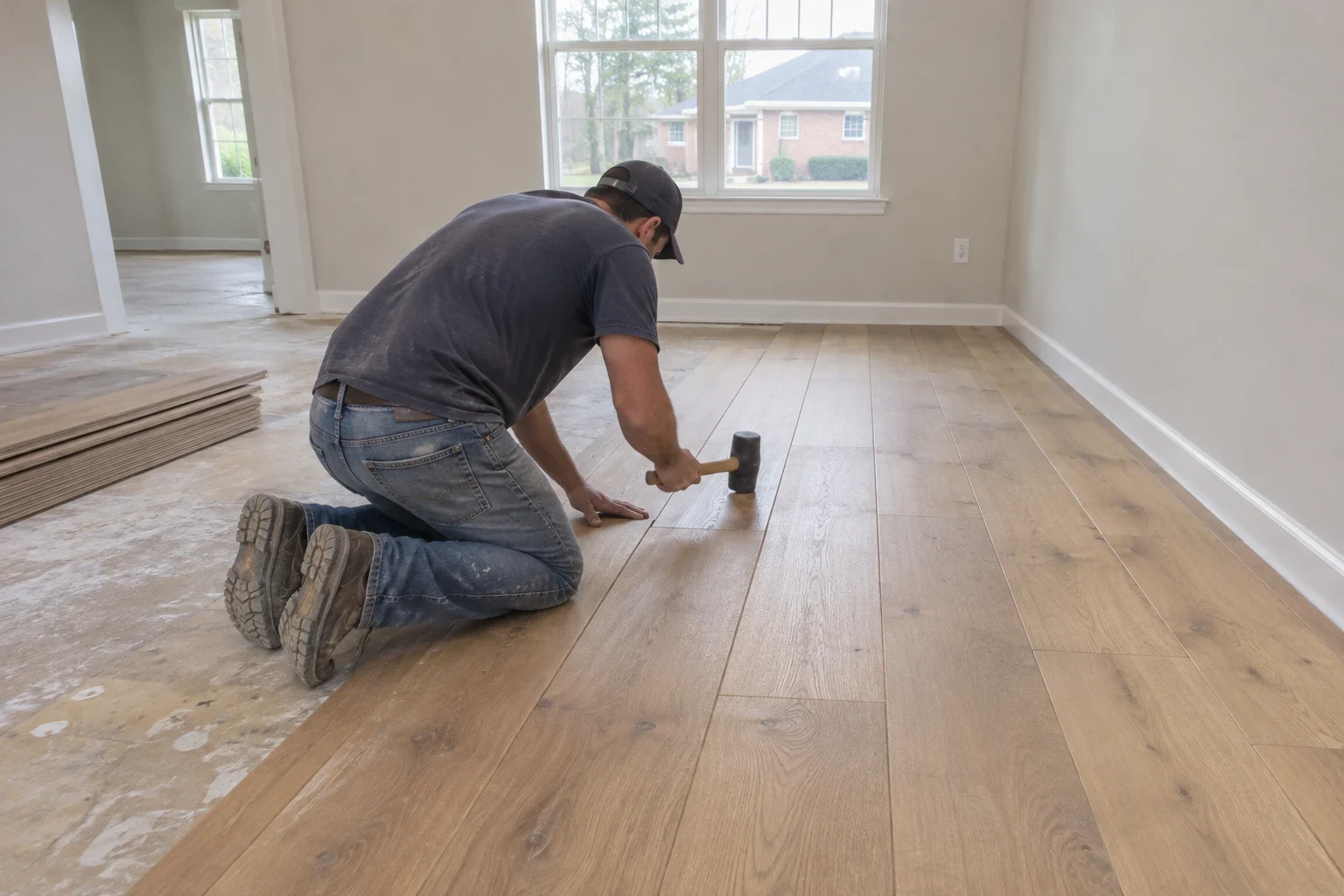
A good floor starts with a good match
Most flooring problems we see were decided before installation day. Solid oak laid over a damp crawlspace cups. Tile on a bouncy subfloor cracks along the grout lines. Click-lock vinyl over an uneven slab separates at the seams. The flooring itself was fine. It just went in the wrong place or on the wrong base.
So we start by walking you through the options side by side: what each one is like to live with, how it handles water, pets and kids, and how it reacts to humid summers and dry, heated winters here. Then we prepare the subfloor so the floor you chose can last.
We install flooring as part of our custom home building and home remodeling work, and as a stand-alone project when you simply want new floors.
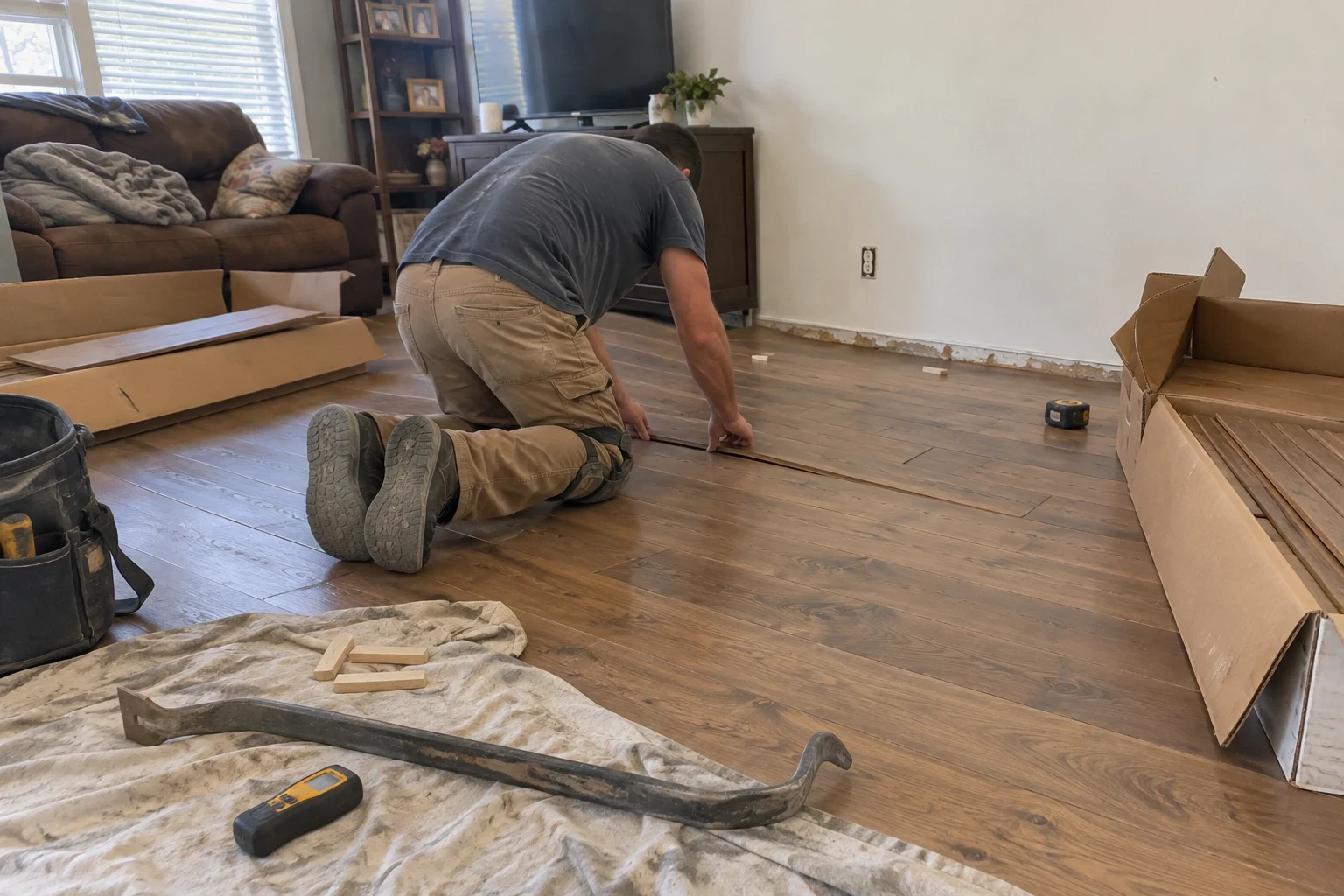
What our flooring installation covers
- 01
Solid and engineered hardwood
Solid hardwood can be sanded and refinished many times, but it moves with humidity, so we acclimate it in the house and leave proper expansion gaps. Engineered wood has a plywood core that stays more stable, which makes it a better fit over concrete slabs and in basements.
- 02
Luxury vinyl plank
LVP is waterproof at the surface and stands up to dogs and spills, which is why families pick it for kitchens and mudrooms. It needs a flat base, so we grind high spots and fill low ones before the first row clicks together.
- 03
Tile and stone
Porcelain works well in bathrooms, laundry rooms and entryways. We check how much the floor flexes, add backer board or an uncoupling membrane where it is needed, and set each piece with the right thinset for that tile.
- 04
Subfloor repair and leveling
We replace soft or water-stained plywood, screw down squeaky spots and pour self-leveling compound where a slab dips.
- 05
Old floor removal and cleanup
We pull up carpet, tack strip, old vinyl or tile, haul it away and clean up at the end of each work day.
- 06
Trim and transitions
Baseboard, quarter round, thresholds and stair nosing are fitted so rooms meet cleanly where one material changes to another.
Questions about Flooring Installation?
Call(864) 469-4282Signs it is time for new floors
Soft spots or bounce underfoot
A spongy feel usually means the subfloor or joists underneath have weakened, often from an old leak. New flooring laid on top hides that problem without fixing it.
Cupping or gaps in hardwood
Boards that curl up at the edges point to moisture coming from below. Gaps that open every winter mean the wood is drying and shrinking. Both tell us something about the space before we recommend a replacement.
Cracked tile or loose grout
Cracks that run across several tiles usually come from movement in the floor beneath, not from a dropped pan.
Finish worn through in traffic paths
When hallways and kitchen work zones show bare wood, you can refinish or replace. We will tell you which one makes more sense for your floor.
A remodel or new floor plan
Opening a wall or changing a layout often leaves two floors that do not match. It is usually the right moment to run one continuous floor through the connected rooms.
How a flooring project runs
- 1
Consultation and samples
We talk through how you use each room and bring samples so you can see them in your own light. You get a written estimate that lists removal, prep, material and trim separately.
- 2
Measuring and moisture checks
We measure each room, check the subfloor for flatness and take moisture readings in the wood or concrete. If the crawlspace needs attention, you hear about it before work starts.
- 3
Delivery and acclimation
Wood flooring sits in the house for several days so it adjusts to your indoor conditions. Keep the heat or air running the way you normally live.
- 4
Prep and installation
We protect cabinets, doorways and the rooms we are not working in, remove the old floor, fix the subfloor and lay the new one. Moving furniture is planned with you ahead of time.
- 5
Trim, walkthrough and cleanup
We fit the trim and transitions, walk the finished floor with you and leave care instructions written for your new floor.
What affects the cost of new flooring
Flooring prices depend more on what is under the floor and the shape of the rooms than most people expect. We price after we have measured and checked the subfloor, so the estimate reflects your house rather than a square-foot guess.
- Material choice
- Porcelain, solid hardwood, engineered wood and LVP vary widely in cost, and each comes in thinner and thicker wear layers and plain and premium grades.
- Subfloor condition
- Leveling a slab, replacing damaged plywood or adding a tile membrane adds labor and supplies. This is the most common reason two quotes differ.
- Removing the old floor
- Carpet comes up quickly. Tile set in mortar or glued-down hardwood takes much longer.
- Layout and stairs
- Many small rooms, angled walls, herringbone patterns and stair treads all add cuts and time.
- Furniture and access
- Rooms full of furniture, or an upstairs reached by tight stairs, take more handling.
Flooring installation questions
Is hardwood or luxury vinyl better for a family with pets?
For pets that scratch and have the occasional accident, LVP is usually the easier floor to live with. Hardwood does scratch, but it can be sanded and refinished later, and some families like that it wears in with the house. Many of our customers put LVP in kitchens and mudrooms and wood in the living spaces.
Can you install new flooring over my existing floor?
Sometimes. Vinyl plank can go over flat, sound tile or sheet vinyl, which saves on removal. We avoid it when the old floor is loose or uneven, or when the added height would catch doors or leave a trip edge at transitions.
How long does flooring installation take?
A couple of rooms of LVP often take a few days. Tile and hardwood take longer because of setting time, acclimation or finishing. We give you a schedule after the consultation, once we know the condition of the subfloor.
Do I need to move out during the work?
Usually not. We work room by room where we can and keep a clear path through the house. Site-finished hardwood is the exception, since you may want to stay elsewhere for a day or two while the finish dries, and we plan that timing with you.
Will engineered hardwood hold up over a concrete slab?
Yes, and it is often the better wood choice over concrete. We test the slab for moisture first, then use a vapor barrier or the right adhesive based on the reading.
Choose your floor with the facts in front of you
Tell us which rooms you have in mind and how your family uses them. We will compare materials with you, check what is underneath and give you a clear written estimate.