ServicesGrading
Grading in Spartanburg
We grade new home sites and existing yards so the ground under your house is solid and the water around it goes somewhere useful. You'll know which soil, fill and stone we plan to use, and why, before any equipment rolls onto your lot.
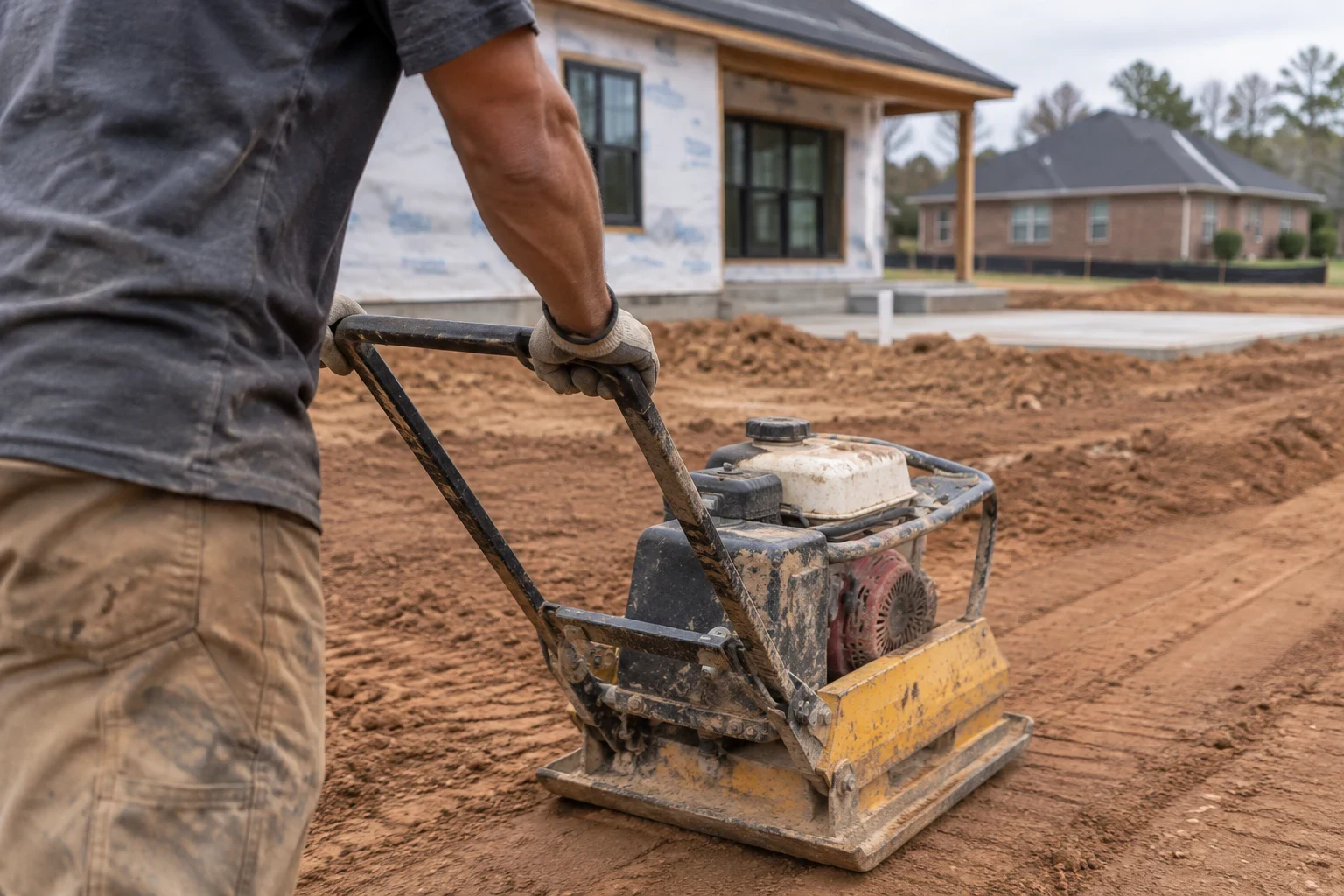
What grading does for your home
Grading shapes the ground. On a new custom home lot, it turns a cleared, uneven site into a level, compacted pad for the foundation and a slope that carries rain away. On an existing home, it fixes yards that have settled or always tipped the wrong way, so water stops collecting against the walls.
The soil decides a lot of how the job goes. Much of the Upstate sits on red clay, which holds water, swells when it's wet and shrinks as it dries. That movement is hard on foundations and driveways if the ground isn't prepared well. We strip and save the topsoil, use fill that compacts properly, and build up the grade in layers you can stand on.
If your lot still has trees and brush, our land clearing service comes first. If you're building, grading leads straight into foundation work, and we plan the two together.
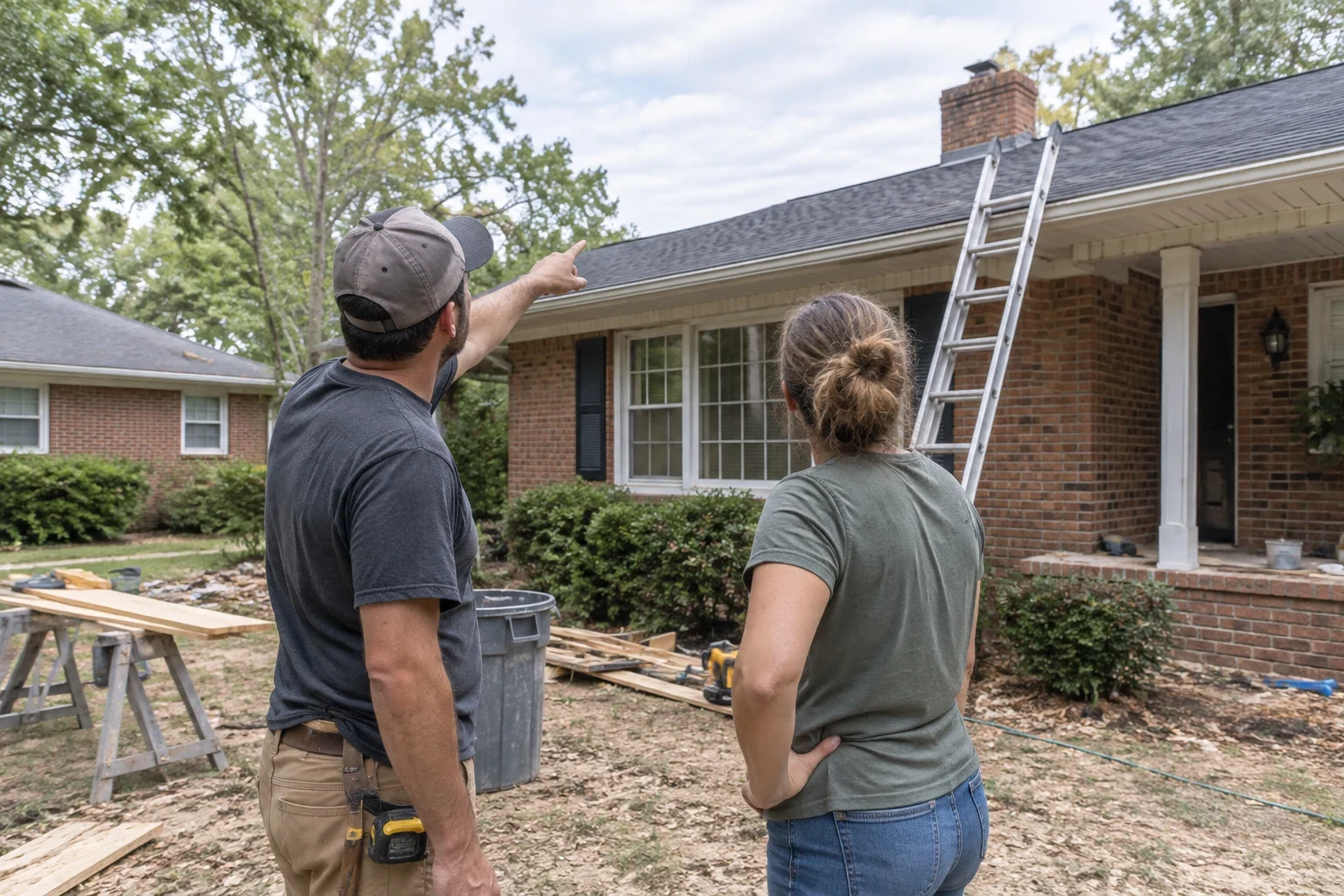
What's included in a grading job
- 01
Topsoil stripped and saved
Topsoil is great for grass and poor for building on. We scrape it off the work area and stockpile it so it can go back on top at the end instead of being buried or hauled away.
- 02
Cutting high spots, raising low ones
High spots get cut down and low spots get built up. New soil goes down in thin layers, and each one is compacted before the next goes on. Dumping a big pile and running over it once is how yards sink a year later.
- 03
Choosing the right fill
Not all dirt is equal. Clay can work as fill when it's at the right moisture and well compacted, but it's slow to drain. Where drainage matters most, we may bring in a sandier fill or crushed stone. We explain the trade-off for your site before we buy anything.
- 04
Building pad preparation
For a new build, we set the pad to the elevation on your plans and compact it so the footings bear on firm ground.
- 05
Slope away from the foundation
The ground should fall away from the house for the first several feet. We set at least the fall residential building codes call for, and more where the lot allows it.
- 06
Swales and finished grade
Shallow swales steer runoff around the house toward the street or a low corner of the property. We finish by spreading the saved topsoil so the yard is ready for seed or sod.
Questions about Grading?
Call(864) 469-4282Signs your yard or lot needs grading
Puddles that hug the house
If water stands along your foundation for hours after a storm, the ground is sending it the wrong way.
A damp or musty crawl space
Moisture under the house often starts with soil that slopes inward. Fixing the grade outside is usually the first step.
Washouts and bare channels
Small gullies in mulch beds or across the lawn show where runoff is moving fast. Left alone, they get deeper with each heavy rain.
Settled soil near the walls
Backfill around older homes tends to sink over the years, leaving a low ring that collects water right where you don't want it.
A cleared lot that isn't level
Once trees and stumps are out, the ground is rarely ready to build on. It needs shaping and compaction before any foundation goes in.
How a grading project runs
- 1
Project consultation and site walk
We walk the property with you, look at where water goes now and talk about your plans. For a new build, we review your house plans and where the home will sit on the lot.
- 2
A written plan with materials
You get a written estimate that lists the work, the fill or stone we expect to use and anything that might need a permit or erosion control. If the soil raises questions, we say so up front.
- 3
Grading days
We protect what's staying, such as trees, walks and driveways, and keep equipment on a set path. Topsoil comes off, then cutting, filling and compacting in layers. We'll keep you posted if rain pauses the work, since wet clay can't be compacted properly.
- 4
Final grade and walk-through
We spread topsoil, rake out the finished slopes and walk the site with you. We clean up the area so it's ready for seed, sod or the next step of your build.
What affects the cost of grading
Every lot is different, so we price grading after we've walked it. The biggest swings come from how much soil has to move and what it's made of. Your written estimate shows each part so nothing shows up later as a surprise.
- Size and slope of the area
- A gentle, small yard takes far less machine time than a steep lot that needs a lot of cutting to make a level pad.
- Fill brought in or hauled off
- If the site is short on usable soil, fill or stone has to be trucked in. If there's extra, it may need to be hauled away. Both add up.
- Soil conditions
- Very wet clay, buried rock or old debris slows the work and can change which materials make sense.
- Access for equipment
- Tight side yards, fences and finished landscaping may call for smaller machines and more hand work.
- Drainage add-ons and permits
- Swales, stone at problem spots, silt fence or a required permit each add to the scope, and we list them separately.
Grading questions we hear often
Can red clay be used as fill?
Often, yes. Clay compacts well when it's at the right moisture, but it drains slowly and moves as it wets and dries. We use it where it performs and bring in better-draining material where water is the main problem. We'll show you which areas get which.
How long does grading take?
A yard regrade around an existing home may take a day or two. A full home site with a building pad can take longer, depending on size, slope and how much fill moves. Rain adds time, because we won't compact soil that's too wet.
Will the equipment tear up the rest of my yard?
Some disturbance is unavoidable, but we plan a single path for machines, protect trees and hardscape you want to keep, and restore the areas we work in. We'll point out anything at risk during the site walk.
Do I need grading before you build my custom home?
Almost always. The foundation needs a level, compacted pad, and the house needs ground that falls away from it. We plan grading alongside foundation work so the elevations match your plans.
Is there a best time of year to grade?
Drier stretches are easiest, since clay handles much better when it isn't soaked. We can work through most of the year and simply schedule around heavy rain. Getting seed or sod down soon after helps keep the new slopes from washing.
Let's look at how water moves on your lot
Tell us about your property and what you're planning. We'll walk the ground, explain your soil and fill options and give you a clear written plan.