ServicesLand Clearing
Land Clearing in Spartanburg
We clear trees, stumps, brush and old debris from your lot so it is ready for grading, a foundation and the custom home you have in mind. Before any machine starts, we walk the property with you and agree on what stays, what goes and where it goes.
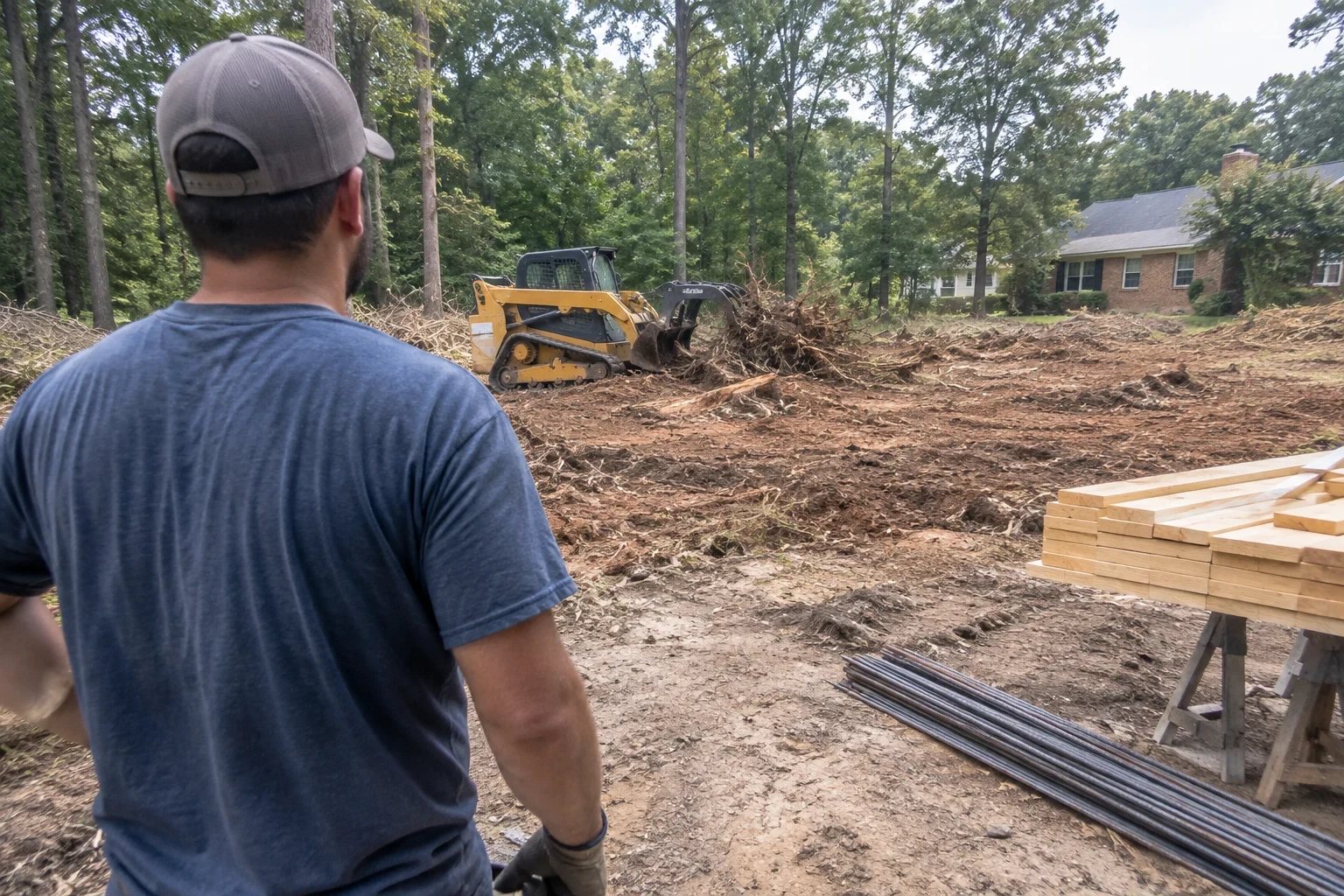
Clearing that sets up the rest of the build
Land clearing is the first real work on a building lot, and it shapes everything after it. Leave buried roots under a slab and the ground can settle as they rot. Clear too much and you lose shade trees, privacy and topsoil you will want back later.
We clear with the finished house in mind. The house pad, driveway, septic area and utility runs get opened up properly, and the trees and buffers you want to keep get marked and protected. Because we also handle grading and foundation work, the hand-off from clearing to the next step is planned rather than guessed.
What our land clearing covers
A walk-through and marked plan
We walk the lot with you, flag the trees worth saving and mark the clearing limits. You see the plan on the ground before anything is cut.
Tree removal and felling
We drop each tree in the clearing zone toward open ground, taking larger ones down in sections when space is tight. That keeps them off neighboring property, power lines and the trees you chose to keep.
Stump and root removal
Under the house pad and driveway, stumps are pulled or ground out along with the main roots. Wood left in that zone breaks down over time and can leave soft spots under concrete.
Brush, undergrowth and old debris
Thickets, vines, fallen timber and leftover junk such as old fencing or scrap get cleared so the surveyor and the grading crew can see the true lay of the land.
Handling of cleared material
Logs, brush and stumps each have options. Mulch can be spread on trails or held for landscaping, good logs can be cut for firewood, and the rest is hauled off. We talk through the trade-offs of each with you.
Topsoil and erosion basics
Where it makes sense, we strip and stockpile topsoil for later use, and we put silt fencing in place where runoff could carry soil off the lot.
Signs your lot needs clearing first
You cannot walk the building site
If you have to push through brush to find where the house would sit, the surveyor, designer and septic evaluator will struggle too.
Trees crowd the house footprint
Big trees within a few feet of a planned foundation can damage it with roots and drop limbs on the roof. Some are worth keeping a little farther out, and we will help you decide which.
Old stumps or buried debris
Rotting stumps, old foundations or dumped fill under the build area need to come out before anyone pours concrete.
No way in for equipment
If a truck cannot reach the site, nothing else can happen. A cleared driveway path is often the first job on a wooded lot.
An addition or outbuilding is planned
Clearing is not only for new lots. If a home remodel includes an addition, garage or workshop, the ground there usually needs clearing too.
How a clearing job runs
- 1
Talk it through by phone
You tell us about the lot, what you plan to build and any trees you care about. We set a time to meet on the property.
- 2
Walk the lot and mark it
Together we flag clearing limits, protected trees, the house pad, driveway and utility paths. We point out soft ground, steep spots and drainage you should know about.
- 3
Clear in a set order
Access path first, then trees, then stumps and roots, then brush and surface debris. Everything is sorted as we go into mulch, logs to keep and loads to haul.
- 4
Leave the ground ready
Before we leave, root holes are filled, topsoil is stockpiled where useful and erosion controls are in place. The lot is ready for grading, and we can walk you through what comes next.
What shapes your clearing price
No two lots carry the same trees, slope or soil, so we only put a number on clearing after walking yours with you. Your estimate spells out which areas get cleared and where the cut wood and brush end up. That way you can see what each part costs and change the plan before work begins.
- Acreage and density
- A lightly wooded half acre and a dense stand of mature hardwoods are very different jobs. Tree size and count matter more than total land area.
- Stumps and roots
- Full stump and root removal under the house pad takes more time and equipment than grinding stumps flush in a yard area.
- What happens to the material
- Mulching on site, keeping logs and hauling everything away each carry different labor and disposal costs. Leaving some of it on the lot often saves money.
- Access and slope
- Narrow entrances, steep ground and wet spots in our Piedmont red clay can slow equipment down or require smaller machines.
- Erosion control needs
- Lots near creeks or with long runoff slopes may need more silt fencing and stabilization to keep soil where it belongs.
Land clearing questions
Something not covered here? (864) 469-4282
Can you keep some of my trees?
Yes, and we encourage it where they are healthy and far enough from the house. We mark them on the walk-through and keep equipment off their root zones as much as we can. Trees right next to the foundation are usually better removed now than later.
Should stumps be ground or pulled out?
It depends on what sits there next. Under a house pad, driveway or patio, we pull stumps and major roots because buried wood rots and the ground sinks. In lawn or garden areas, grinding below grade is often enough and costs less.
What do you do with the trees and brush?
We go over the options with you. Brush can be chipped into mulch for paths or beds, sound logs can be cut for firewood or left for you, and the rest gets hauled off. We note your choices on the estimate.
Is clearing the same as grading?
No. Clearing removes what is growing on and buried in the ground. Grading shapes the soil itself so water drains away from the house and the pad is level and compacted. We handle both, and our grading page explains that step.
Do I need a permit to clear my lot?
Some projects do, depending on how much ground is disturbed and where the lot sits. We check the requirements for your property before work starts and let you know what is needed.
How long does land clearing take?
A small, lightly wooded lot can take a few days. Larger or heavily wooded property takes longer, and wet weather can pause work so the clay is not rutted. We give you a realistic timeline after the walk-through.
Start with a walk across your lot
Tell us about your land and what you hope to build, and we will set up a time to look at it together. You will leave with a clear plan for what comes out, what stays and what happens next.